CytoBuoy offers solutions for analysis and classification of microorganisms and particles in water and complex media. Providing a more holistic view on the dynamics of the microworld by combining speed, information and size range.
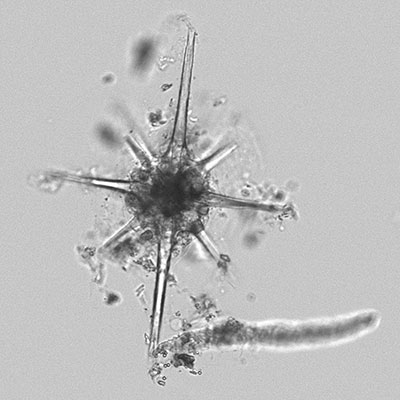
Collect in depth information on microbial communities and diversity, viability, germination, physiology and aggregate status in bioprocesses.
Quickly detect changes, notice trends by high frequency automated analysis of microbial composition w.r.t. food security, source/stock contamination, production of microalgae and valuable biocompounds, aquaculture protection.
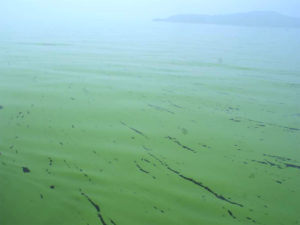
Monitor abundance and growth of phyto- and zooplankton, bacteria, HABs on spatial and temporal scales for ecological status of surface waters and ocean observation.
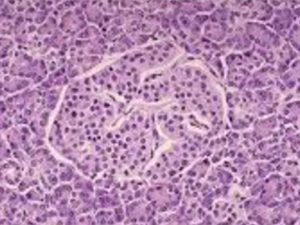
Easy and comprehensive screening in single to multicellular organism models in developmental biology, biomedical from spermatozoa to cell clusters, as well as particle engineering e.g. cell encapsulation, microcapsules etc.
Explore our instruments and the available deployments options & supporting technologies on our products page
We provide specially designed solutions for a broad range of applications, including high frequency water monitoring and cutting edge ecological and biological research.
To support harmonisation across the community, Dr. Veronique Creach (Cefas) is developing a Terms of Reference (TOR) within the ICES Working Group on Phytoplankton and Microbial Ecology (WGPME): “Create a guide for determining consistent plankton observations at high frequency.”
High-frequency flow cytometry and imaging are increasingly used to characterise phytoplankton diversity, including community cell-size structure. This approach aligns with the GOOS-edited (2025) Essential Ocean Variable Specification Sheet and supports higher-order products such as Phytoplankton Functional Types. As autonomous, high-sampling deployments expand, shared best practices for
collection, measurement, and analysis are essential.
To support harmonisation across the community, we are developing a Terms of Reference (TOR) within the ICES Working Group on Phytoplankton and Microbial Ecology (WGPME): “Create a guide for determining consistent plankton observations at high frequency.”
Who we’re looking for: CytoBuoy users (any platform or configuration).
What to share: sampling workflows, calibration/QA approaches, processing pipelines, metadata practices, and lessons learned from autonomous/high-frequency deployments.
Why participate: help establish consistent methods and improve
comparability across datasets and regions.
If you use a CytoBuoy instrument and would like to contribute, please contact Dr Veronique Creach (veronique.creach@cefas.gov.uk) or Nicole Poulton (npoulton@bigelow.org). A brief note describing your instrument configuration and use case is enough to get started.